The Person Behind The Site
About Mike
Living with a high cervical spinal cord injury for over 25 years, still going deeper into the science every day.
Living with a high cervical spinal cord injury for over 25 years, still going deeper into the science every day.
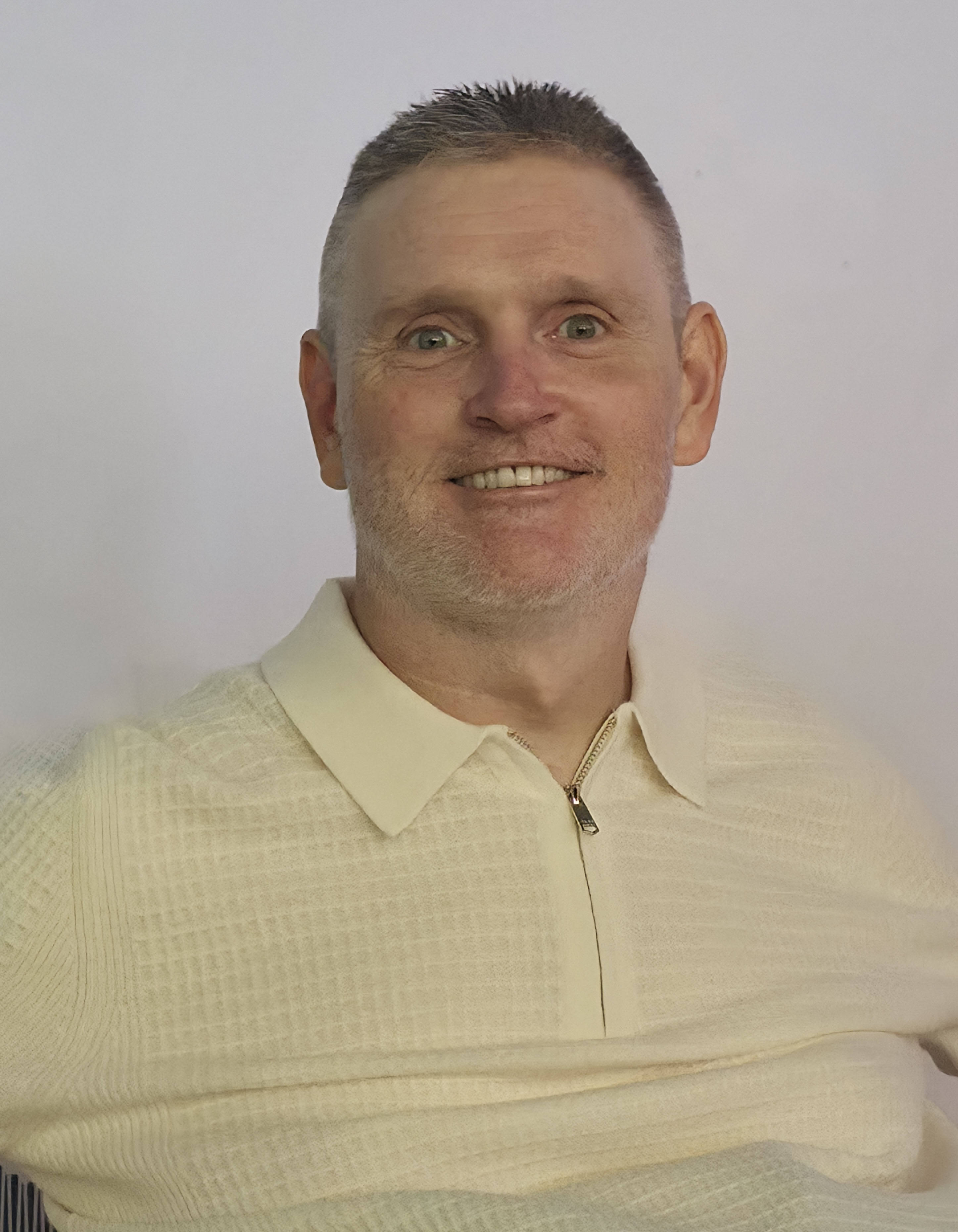
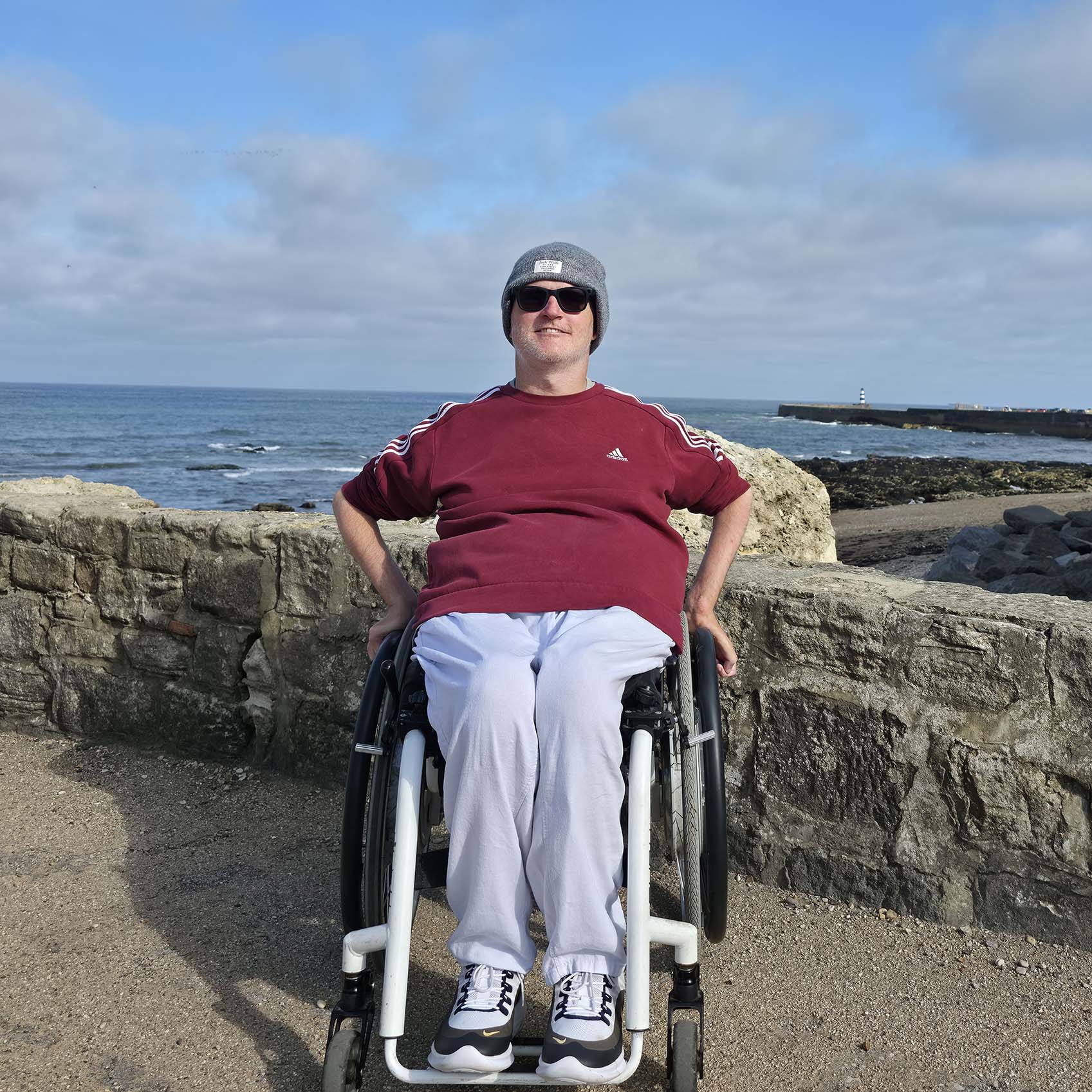
Hi, I'm Mike.
A normal Northern UK lad with big dreams.
I've been living with a high cervical spinal cord injury for over 25 years. Over that time, SCI stopped being something I simply lived with and became something I had to truly understand: the biology, the secondary complications, the emerging therapies, and the hard gap between what the science says and what actually reaches people.
I've always been enthusiastically interested in technology, biology, and all things science, studying purely for my own personal understanding and to keep my brain active. Over time, understanding my own injury became a genuine passion.
A big shoutout to The Open University. Its distance learning model was a genuine lifeline. When I wasn't fit enough to attend full-time university, the OU let me study entirely on my own terms, at my own pace, from home. I really enjoyed it.
Over the last ten years that curiosity has never switched off. Alongside the formal qualifications, I've been self-teaching continuously: working through biology textbooks and medical journals, following the latest SCI research, learning 3D modelling and animation, building Android apps, writing code in C++, Java, and beyond, and staying closely across the rapid development of artificial intelligence. None of it was for a qualification. All of it was because I genuinely wanted to understand it.
I believe AI is one of the most significant forces heading toward medicine right now, with the potential to accelerate drug discovery, diagnostics, and personalised treatment in ways that would have seemed like science fiction not long ago. Alongside that, I watch the convergence of robotics and medicine with real personal interest. The idea that technology and the human body are beginning to work together in increasingly sophisticated ways is not abstract to me. I believe that advances in robotics, neuroprosthetics, and intelligent assistive systems will help people with spinal cord injuries, including myself, become meaningfully more independent. Not one day far off in the future, but within reach.
My next step, and a real hope for 2026, is to begin studying a Neuroscience degree.
Diploma of Higher Education — 2015
Software development, algorithms, and object-oriented programming. The technical foundation behind this platform.
Cert. Natural Sciences (2003) · Cert. Health Sciences (2012)
From human genetics to cell biology, providing the scientific grounding behind every analysis on this site.
Completed Modules
Completed Modules
Deep dives, therapy breakdowns, and the Bangkok trip. All documented.
Latest Videos
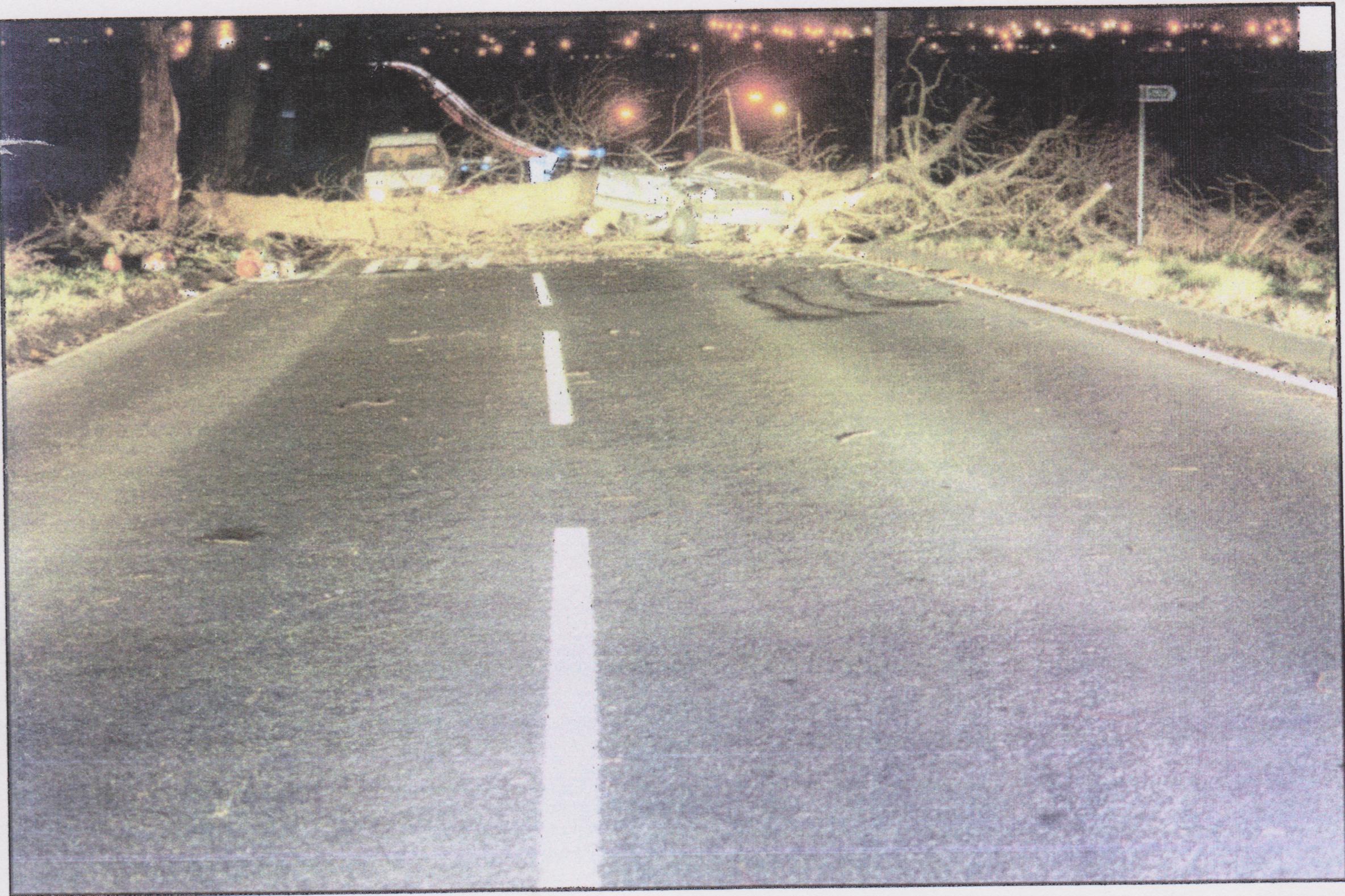
On the night of 30 November 1999, I was driving to pick up my girlfriend along a dark country road, trees lining both sides, no streetlights, a storm raging hard enough to push the car across the lanes. Visibility was poor. The wind was loud.
What happened next was a precise, terrible coincidence. At the exact moment I passed beneath it, an enormous tree, torn loose by the storm, came down directly onto the car. Not lying in the road. Not a hazard I could have seen or avoided. It fell as I drove under it, in complete darkness. There was no warning. No time. Just the night, the wind, and then impact.
The car was crushed under the full weight of the tree: bonnet forced upward, driver's door blown open from the force. And I was pinned inside.
It took emergency crews several hours to reach me. They had to saw through sections of the tree, then lift it, then cut the top of the car away entirely before they could safely extract me. I was still conscious inside for most of it.
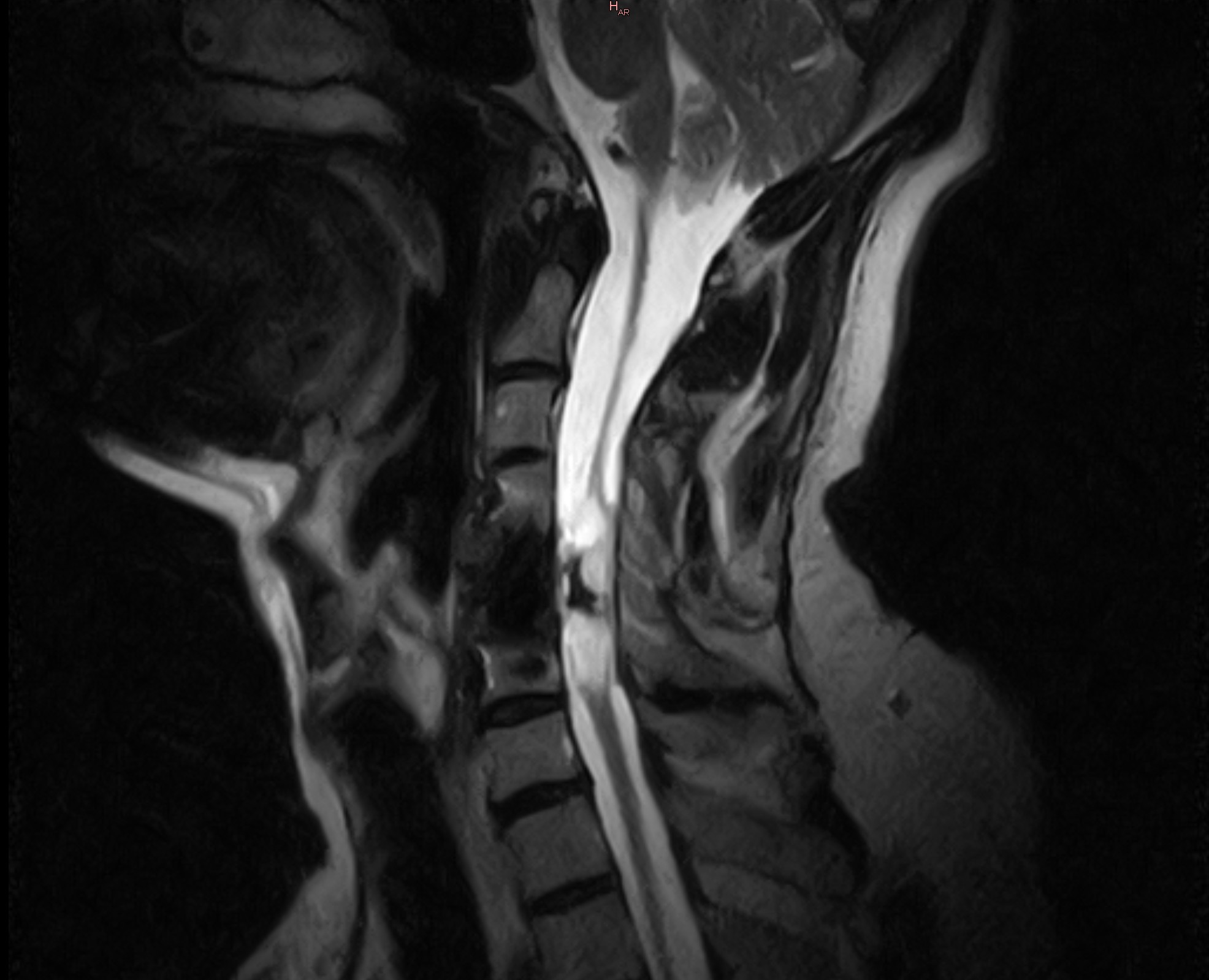
Physically, the damage from the crash itself was, by some measure, minor. No major external injuries, no broken bones beyond what had happened to my spine. But those vertebrae, C3, C4 and C5, were destroyed. The forces that passed through my neck in that fraction of a second had torn apart the very architecture of my cervical spinal cord, as visible in the MRI above.
I spent the next ten weeks in intensive care.
After intensive care I was transferred to Hexham Spinal Injury Rehabilitation Unit in Northumberland, a specialist centre that has since closed, where I spent the next two years in rehabilitation.
The injury to my C3–C5 levels meant the early prognosis was deeply uncertain. The spinal cord is not a simple on/off switch; it is a complex, layered structure, and the extent of what survives often only becomes clear over months of intensive therapy. What gradually emerged for me was a mixed picture: some function from C4 returning, some partial C5 preserved, enough to regain limited but meaningful movement in my arms and shoulders, though not enough to restore independence in the way I had known it.
Two years of rehabilitation. Thousands of hours of physiotherapy, occupational therapy, learning entirely new ways to exist in a body that had fundamentally changed. I left Hexham and went home, a different version of myself, but still myself.
"The injury is only the beginning of the story. What comes after: the adaptation, the learning, the refusal to stop asking questions. That's the part nobody tells you about."
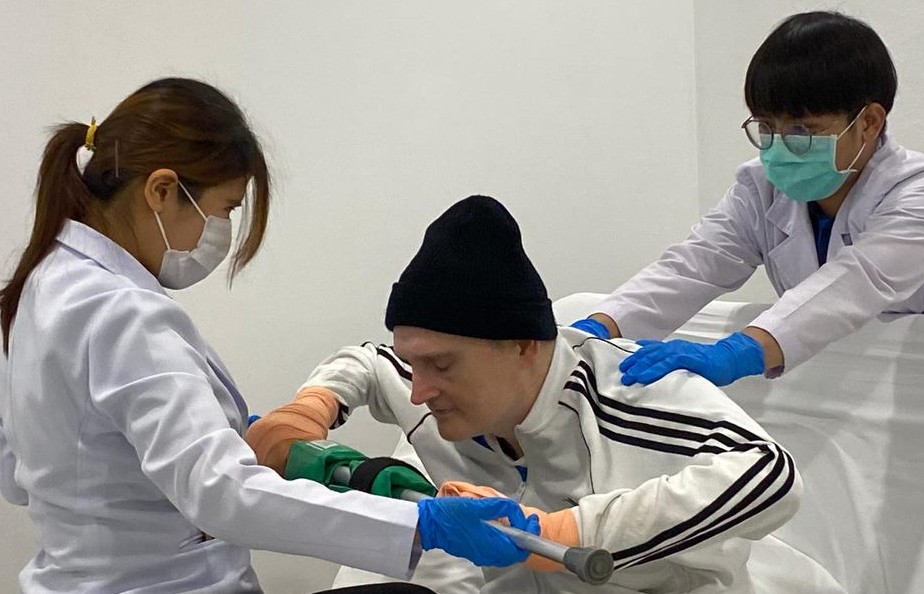
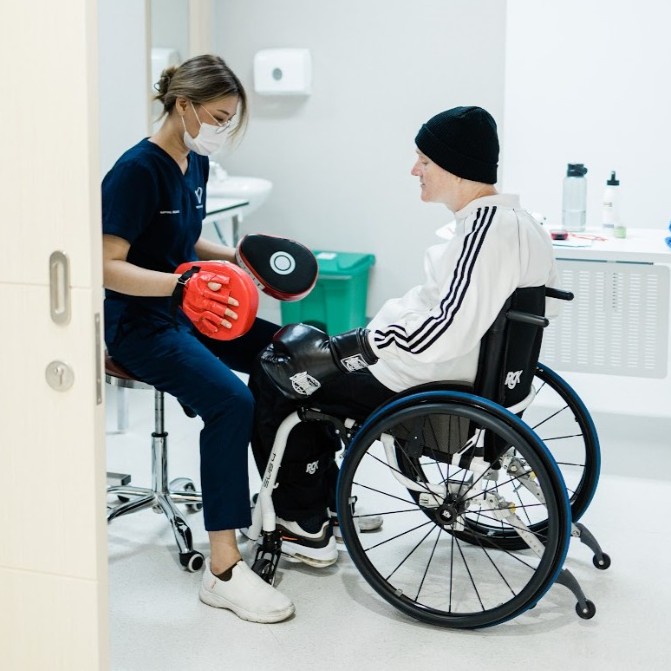
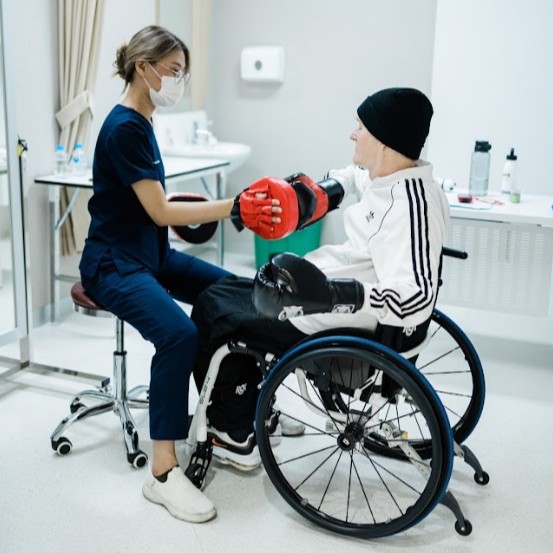
In 2023, after 24 years post-injury, I travelled from the UK to Bangkok to pursue epidural stimulation, stem cell injections, and intensive rehabilitation. A major decision that reflected everything I believe about why people with SCI deserve to look seriously at what is emerging, while staying honest about the science.